
Protein Contribution
Spirulina is protein-rich on a dry-weight basis and can contribute to the protein profile of formulated nutrition.
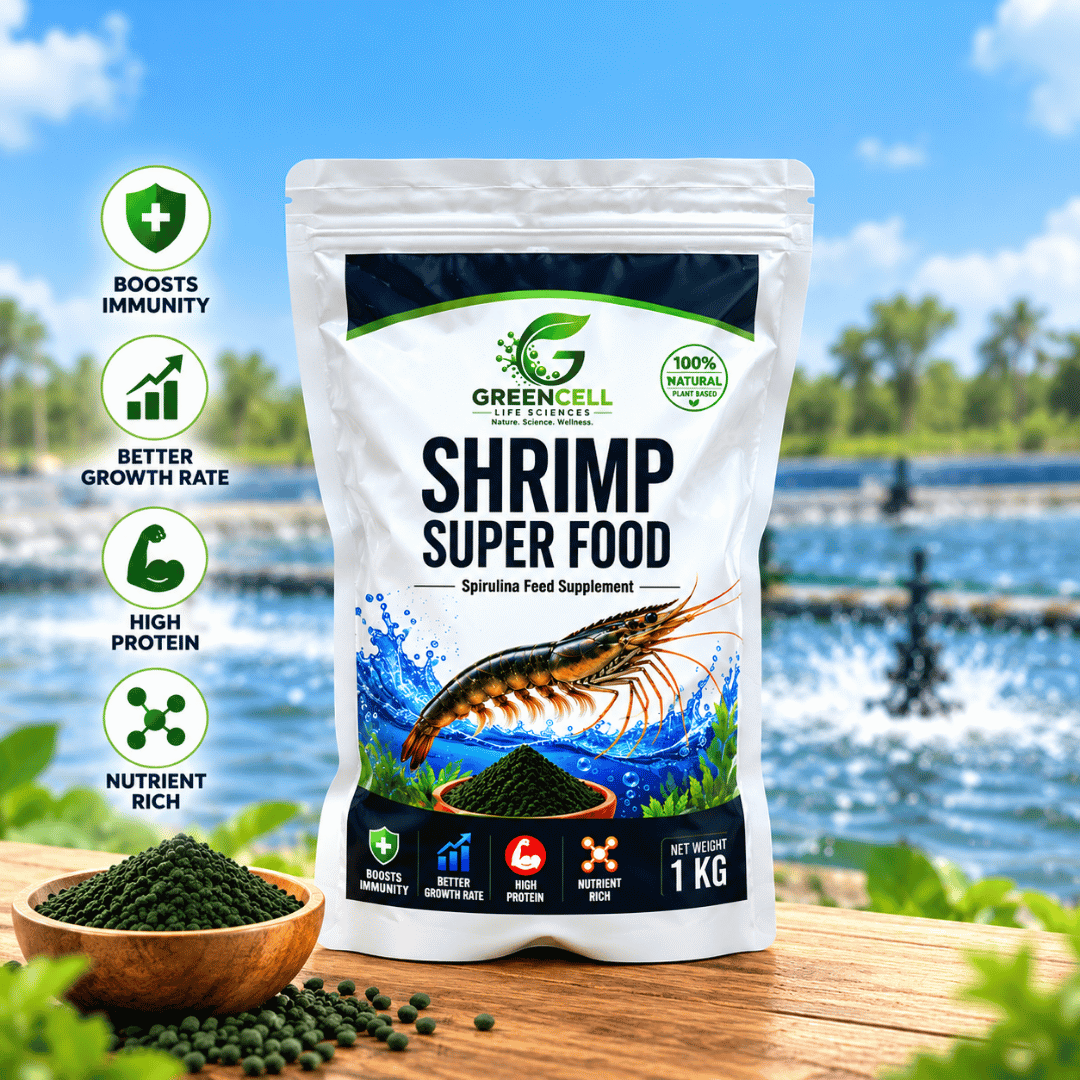
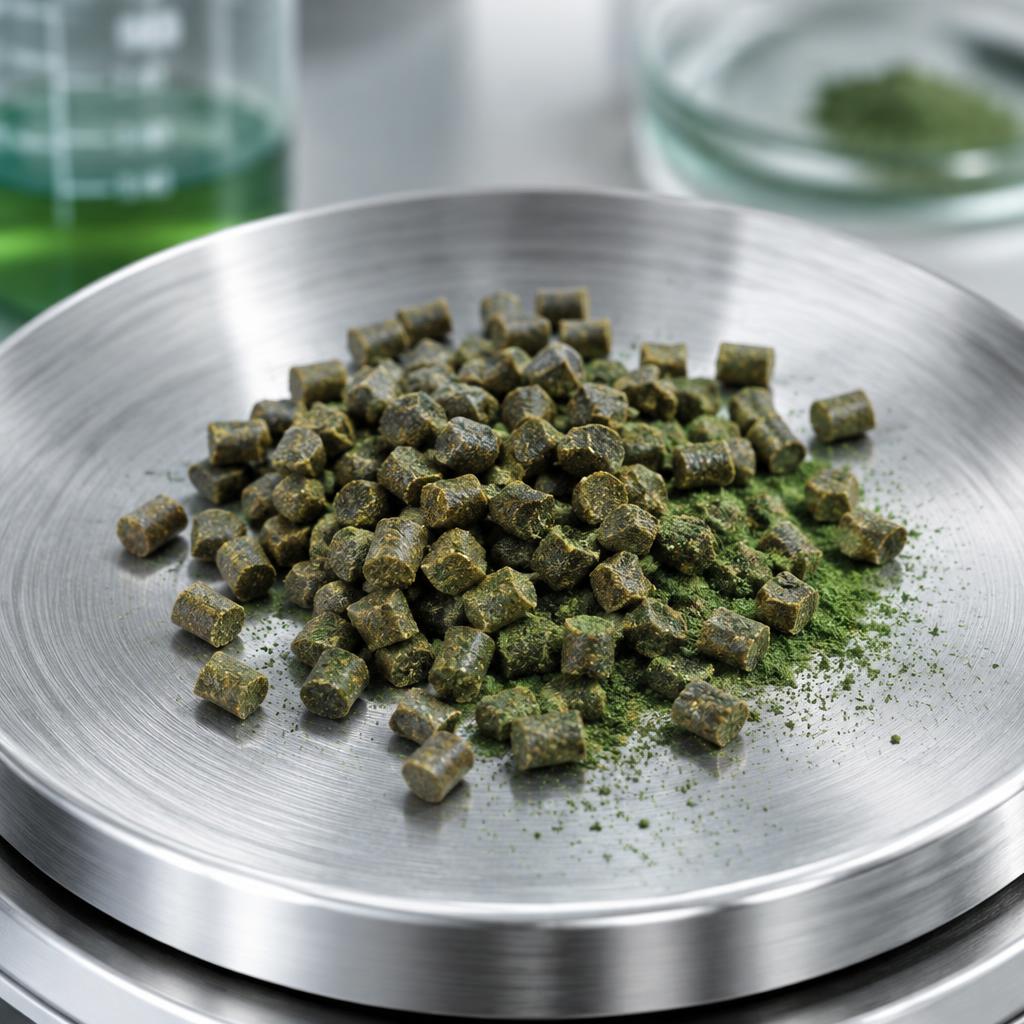
Spirulina is a nutrient-rich microalgal ingredient studied in aquaculture as both a feed ingredient and dietary supplement. A study in L. vannamei found 0.5% spirulina meal in a complete diet acted as a feeding attractant under the study conditions.
Spirulina is protein-rich on a dry-weight basis and can contribute to the protein profile of formulated nutrition.
It contains pigments and compounds including phycocyanin and carotenoids.
Research in shrimp has evaluated spirulina meal as a feeding attractant under specific study conditions.
Research and meta-analysis report potential improvements in growth and feed utilization depending on dose and diet.
Natural pigments are among the components that make spirulina relevant to aquaculture research.
Spirulina is also studied as an alternative feed ingredient within broader sustainable nutrition strategies.
Spirulina food contents
Composition varies with species, cultivation, harvesting and processing. The product laboratory specification/COA should be the definitive composition.
Laboratory test report
The original website cites Bureau Veritas India Testing Services Pvt. Ltd., Report No. BVH2600041137, issued 04 Feb 2026, for a 200 g spirulina powder sample as received.
| Test parameter | Result | Unit / LOQ |
|---|---|---|
| Protein | 62.06 | g/100 g |
| Moisture | 6.61 | % |
| Total Ash | 6.56 | % |
| Acid Insoluble Ash | 0.86 | % |
| Arsenic | BLQ | LOQ 0.01 mg/kg |
| Cadmium | BLQ | LOQ 0.01 mg/kg |
| Lead | BLQ | LOQ 0.01 mg/kg |
| Mercury | BLQ | LOQ 0.01 mg/kg |
| Appearance | Green colour spirulina powder | Visual examination |
BLQ = Below Limit of Quantification. These results apply to the submitted sample, not every future GreenCell batch. Values are reproduced from the original website; the underlying report has not been independently verified here.
There is no single universal shrimp-farm dosage. A 2022 meta-analysis estimated an optimal level of about 1.67% spirulina meal as a dietary supplement for shrimp. Individual studies tested different levels depending on use as an additive or feed ingredient.
Spirulina required
Feed quantity × inclusion rate ÷ 100
| Feed | 0.5 % | 1 % | 1.67 % | 2 % |
|---|---|---|---|---|
| 100 kg | 0.50 kg | 1.00 kg | 1.67 kg | 2.00 kg |
| 500 kg | 2.50 kg | 5.00 kg | 8.35 kg | 10.00 kg |
| 1,000 kg | 5.00 kg | 10.00 kg | 16.70 kg | 20.00 kg |
Important: These calculations are for pure spirulina meal. Do not directly apply them to GreenCell Shrimp Super Food if the commercial product is a blend. Final product-specific dosage must follow the actual formulation and label.
How to use
Determine the actual feed quantity to be treated.
Use a weighing scale and follow the GreenCell label dosage.
Distribute the product uniformly over the feed.
If the label specifies a binder/coating method, use it as directed.
Use treated feed within the recommended period.
Introducing a new supplement
Check batch, shelf life, storage, COA/specification and label.
Start according to the label and observe feed acceptance and tray response.
Monitor feed consumption, biomass gain, FCR, survival and water quality.
Frequently asked questions
No. It can be a dietary ingredient or supplement; it is not automatically a complete replacement for balanced commercial shrimp feed.
Do not assume a feed-grade spirulina product should be broadcast into pond water. Water application is a different use case and requires a product specifically designed and validated for it.
There is no universal farm dosage. Research includes several levels. For pure spirulina meal, about 1.67% was estimated as an optimal supplementation level in a meta-analysis; GreenCell’s final product dosage should be product-specific.
Some studies report changes in immune-related responses and pathogen-challenge outcomes, but results depend on species, dose and culture conditions. It should not be presented as a guaranteed disease cure or prevention product.
Follow the product label. Protect treated feed from moisture, heat and contamination and use it within the recommended period.
Important farm management note: Spirulina is not a substitute for good seed quality, biosecurity, balanced feed, correct stocking density or water-quality management.
For product information, COA/specification, distribution or bulk requirements.